
The Symbolism of Craft
When traditional work meets contemporary design—that was the approach behind this project.
Is it possible to design without telling a story? Of course it is. However, my approach to design is rooted in getting closer to the history and origins of the people behind a brand—its products and its services. When I can connect with that history, I’m able to do deeper work: building with intention, focusing on details, and creating space where even weaknesses can become opportunities. In this sense, every decision made throughout the design process matters.
This is why the advertising agency Gestaltung unserer Tage contacted me to design a logo for Jörg Trommer, a master painter who is also dedicated to decoration and restoration. After reviewing the brief and understanding his work, we concluded that portraying Jörg as a Handwerker best suited the project.
My approach to design is strongly inspired by symbolism. I believe in the construction of cultural identity and in the expression of abstract concepts that strengthen not only brand identity but also communication.
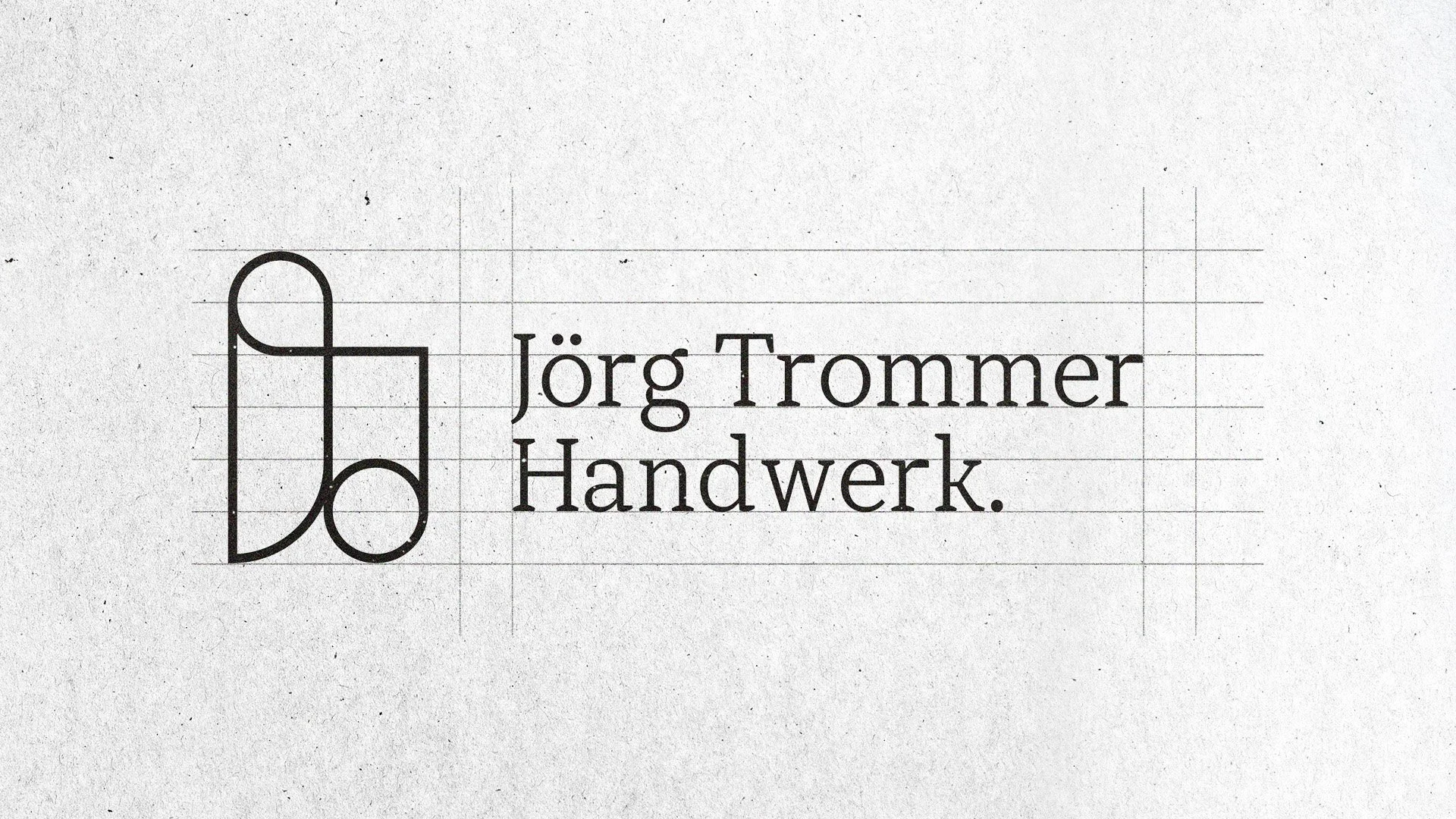
In this sense, symbols have always been part of human history—from cave drawings to the most modern expressions of contemporary art, such as street art. We see this throughout history and across different cultures, civilizations, clubs, and groups. This is why, in this project, I chose to design a monogram, as this form of symbolism has long been used as a signature by artists and craftspeople to mark their work.
For centuries, monograms have been preserved and adapted across artistic movements, from Rococo to Art Nouveau and Art Deco, among others. Today, they remain present in luxury brands such as Chanel and Louis Vuitton, in automobile brands like Toyota, and even in sports teams such as Fluminense Football Club, Juventus, and the New York Yankees.
-The full project is available at the link below.
